
Quality Control: The Standard Behind Every Specification
In botanical ingredient manufacturing, quality is not a checkpoint at the end of a production line — it is a discipline embedded at every stage, from the moment a herb is sourced in the field to the moment a finished batch is released for dispatch.
At Phyto Life Sciences P. Ltd., Quality Control and Quality Assurance operate as integrated functions, governed by pharmaceutical-grade standards and supported by one of the most advanced laboratory infrastructures in the Indian botanical extract industry.

Independent, Multi-Disciplinary Laboratories
Our Quality Control division operates through four independent, fully equipped laboratories working in close coordination:
Phytochemistry Laboratory
Identification, quantification, and characterisation of active phytochemical markers.
Pharmacology Laboratory
Bioactivity screening and validation of extract efficacy.
Microbiology Laboratory
Microbiological quality control and antimicrobial screening.
Analytical Chemistry Laboratory
Advanced instrumental analysis for identity, purity, and potency testing.
Advanced Analytical Instrumentation
Our QC laboratory is equipped with the most sophisticated analytical instruments available for botanical ingredient testing:
High-Performance Liquid Chromatography
Quantification of active marker compounds with high precision.
High-Performance Thin Layer Chromatography
Botanical identity confirmation and fingerprint profiling.
Gas Chromatography–Mass Spectrometry
Essential oil composition analysis, residual solvent testing, and volatile compound profiling.
Atomic Absorption Spectroscopy
Heavy metal testing for lead, arsenic, cadmium, mercury, and other elemental contaminants.
UV-Vis Spectrophotometry
Rapid concentration measurement of specific active compounds.
Infrared Spectroscopy
Structural confirmation of isolated phytochemicals.
Karl Fischer Titration
Precise moisture determination critical for shelf-life stability.
DNA Fingerprinting
Genetic-level species authentication to prevent adulteration and mislabelling.
A 4-Step Identity Authentication Program
Botanical ingredient fraud — through species substitution, adulteration, or mislabelling — is a known risk in the global herbal supply chain. Phyto Life Sciences P. Ltd. has developed a proprietary 4-step identity authentication program to give our clients absolute confidence in the identity of what they are purchasing.
Macroscopic Examination
Visual & botanical organoleptic inspection.
Microscopic Analysis
Cellular structures & histological identification.
Chemical Profiling
HPTLC & HPLC chromatographic fingerprinting.
DNA Fingerprinting
Genetic species authentication testing.
450+ Plant Species Reference Library
Working together, our dedicated botanists and researchers have built a reference library covering over 450 plant species sourced from across pan-Asia. Each species is authenticated through a combination of macroscopic visual examination, microscopic analysis, chemical profiling, and where required, DNA fingerprinting — ensuring that substitution is structurally impossible to pass undetected through our intake process.
Microbial Quality Control
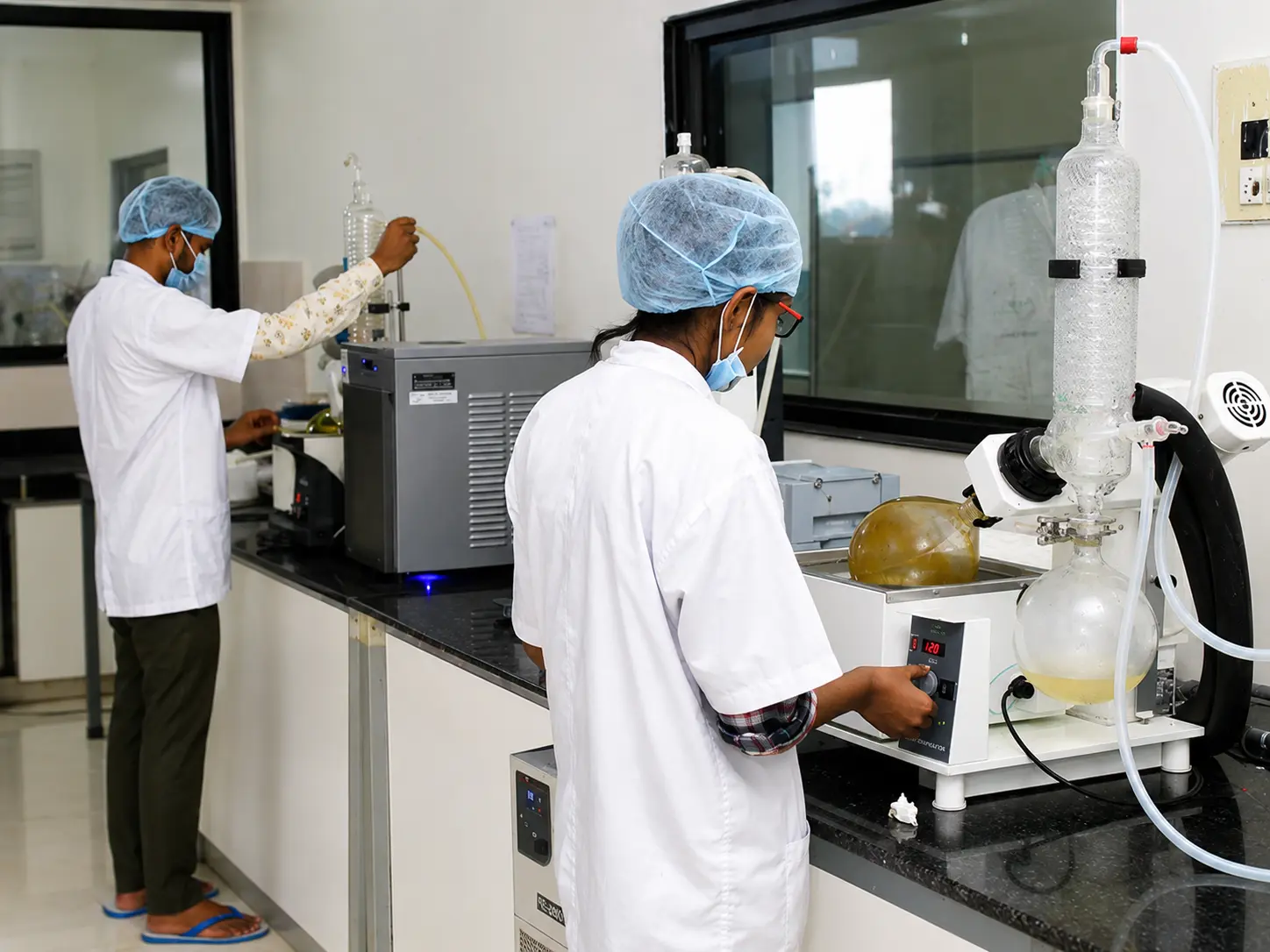
Our Class D certified Microbial Laboratory is dedicated to microbiological quality control for herbal products. Analytical procedures are specifically designed to accommodate the complexity of botanical matrices, in accordance with applicable pharma guidelines. The laboratory conducts:
- Total Viable Count (TVC) and Total Yeast & Mould Count
- Detection of specified microorganisms (E. coli, Salmonella, Staphylococcus aureus, Pseudomonas aeruginosa)
- Antimicrobial screening of herbal extracts
- Environmental monitoring of production areas
- Aflatoxin and mycotoxin testing
Quality Assurance: The Governance Layer
Our independent Corporate Quality Assurance (CQA) Department ensures that QC data translates into compliant, consistent product releases. The QA function is not a downstream review — it is integrated into every stage of the production process.
Pre-Production Controls
- Botanical identification and raw material authentication at intake
- Supplier qualification and raw material COA review
- Pesticide residue testing on incoming plant material
- SOP compliance verification before any batch commences
- Line clearance protocols between production batches
In-Process Controls
- Critical sampling at defined process stages
- Temperature and extraction cycle time monitoring
- In-process counter checks by QA personnel independent of production
- Closed material handling system to prevent cross-contamination
- HVAC monitoring of classified production and packing areas (Class D pharma standard)
Post-Production Release
- Method validation for all finished product specifications
- Residual solvent analysis
- Elemental impurity profiling
- Stability studies to support claimed shelf life and storage conditions
- Batch record verification and documentation review prior to release
- Investigation and disposition of any out-of-specification results
Production Architecture That Prevents Risk
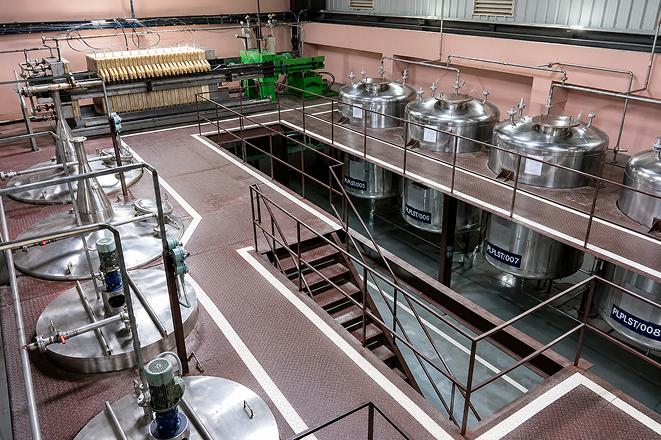
Our manufacturing facility is structured to eliminate the risk of cross-contamination through physical and procedural separation of extraction categories. Four distinct extraction sections operate independently:
Downstream processing areas — Vacuum Drying, Spray Drying, Milling, Blending, Packing, and Storage — are all designed and maintained under HVAC-controlled environments consistent with Class D pharmaceutical guidelines. All equipment is fabricated from SS-316 to meet the highest corrosion resistance and hygiene standards.
Traceability: From Field to Finished Product
Every ingredient manufactured at Phyto Life Sciences P. Ltd. is supported by a complete paper trail that tracks the journey from raw material sourcing through to finished batch release. Our traceability program includes:
Regional Sourcing
Seasonal herb procurement records tied to authenticated source regions.
Lot Tracing System
Batch-specific raw material lot tracing from farm intake to extraction.
Analytical Record Linking
In-process and final analytical records linked to unique batch numbers.
Retention Sample Library
Retention samples maintained for every released batch throughout shelf life.
Complaint Protocol
Market complaint investigation and root cause analysis protocols.
This traceability architecture ensures that our clients can respond swiftly and completely to any regulatory enquiry or product quality event.
Technical QA Support
For technical data sheets, analytical method summaries, or batch-specific quality documentation, our QA team is available to provide complete support to your procurement and regulatory affairs teams.
Need Technical Data Sheets or Batch Quality Records?